Restart a Stalled Creative Project Without Guessing What Still Applies
A paused project can return with changed people, content and priorities. Before reopening production, check the last agreed state and build a small restart decision that fits the current requirements and your available capacity.
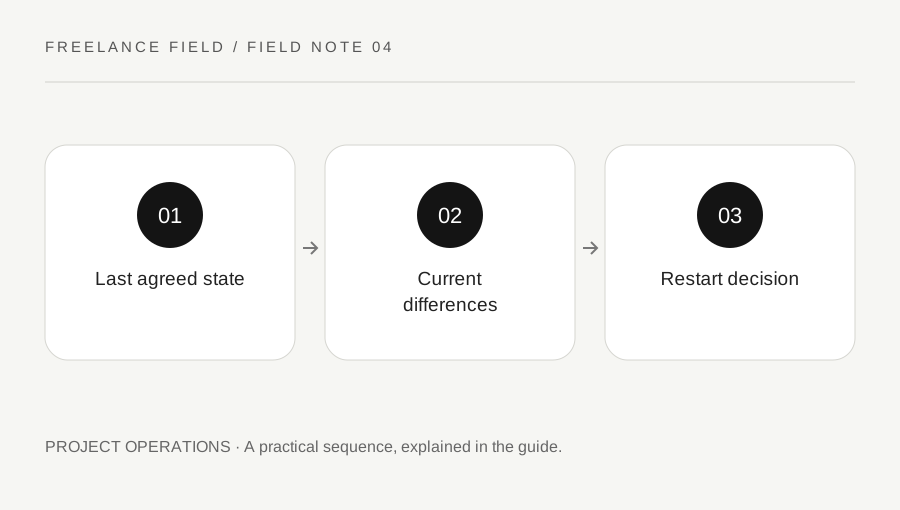
Original explanatory diagram. Examples illustrate a method or decision; they are not claims of personal testing.
Locate the real stopping point
Find the last approved brief, version, feedback record and delivery schedule. Separate completed work from work that was merely drafted. Note why the project stopped if that is documented: missing client content, an internal decision or a mutually agreed pause. Do not fill gaps in the record with a confident memory.
Build a short inventory with three columns: approved, unfinished and uncertain. For example, a presentation may have an approved visual direction, ten drafted slides and no final sales figures. This is more useful than saying the deck is nearly finished. The inventory establishes what can be reused and what needs a new decision before you promise a delivery date.
Check what changed during the pause
Ask whether the audience, objective, organisation, content owners or publishing channel has changed. Confirm that supplied assets and permissions remain appropriate for the intended use. A new project contact may not know which previous decisions were settled, so provide a concise summary rather than sending an unexplained archive.
Use a focused restart questionnaire with only the differences that matter. In an illustrative brochure paused for several months, product names and contact details may have changed while the page size remains correct. Identify those specific items. Do not automatically redesign everything, but do not assume age alone leaves every part valid. Treat the current brief as something to verify.
Recheck production capacity and dependencies
Compare the remaining work with your present schedule. The original production slot may no longer exist. List any dependency that must arrive before a date can be confirmed, including copy, stakeholder review and external production. A restart request does not remove other commitments that were agreed during the pause.
Show a realistic sequence: input confirmation, a limited reorientation review, production, client review and final output. Include enough time to inspect old source files and resolve software or asset issues. If the source opens correctly, that is useful evidence; it is not proof that the current output specification is unchanged. Keep technical checking and client requirement checking separate.
Agree the restart route
Review the existing agreement for pause, scheduling, payment and change provisions. Do not invent a restart fee or penalty that was never agreed. Where interpretation is needed, seek appropriate local advice. The operational proposal can still explain what remaining work and changed requirements now involve.
Offer a clear route: resume the original scope with a new schedule, revise the scope, or close the old project and discuss a separate one as appropriate. Identify which prior approvals remain in force and which need replacement. Use the agreement process to confirm the outcome before reserving production time or beginning changed work.
Make the first restart milestone small
Choose an early checkpoint that tests the new baseline, such as a revised contents list or one representative page. This can expose a changed direction before the entire remaining project is produced. Tell the client exactly what they are reviewing and who must respond. Avoid repeating a full discovery process when only a narrow recheck is necessary.
Keep the restart summary at the front of the project folder and mark superseded schedules clearly. After the checkpoint, update the remaining plan with actual information. At completion, record which pause assumptions caused friction and improve future agreements or intake questions. The aim is a usable current project, not an argument about who remembers the old one most accurately.
A practical checklist
Choices are saved in this browser. Reset them here or clear this site’s browser storage.
Questions that come up
Does the old deadline automatically return?
Check the agreement and current dependencies. A paused project needs a realistic scheduling discussion rather than an assumed immediate slot.
Should I charge a restart fee?
Only according to an appropriate agreed arrangement and applicable requirements. Do not introduce an unsupported penalty after the pause.
Must every old approval be repeated?
No. Identify what still applies and what changed, then review the affected decisions.
References & scope
Background references checked on 18 October 2026. Worked examples and diagrams are original teaching material.