Assess an Urgent Creative Request Before Promising the Deadline
A short deadline is a production constraint that needs a concrete decision. Check inputs, approval time and minimum acceptable output before promising an urgent project simply because the visible deliverable looks small.
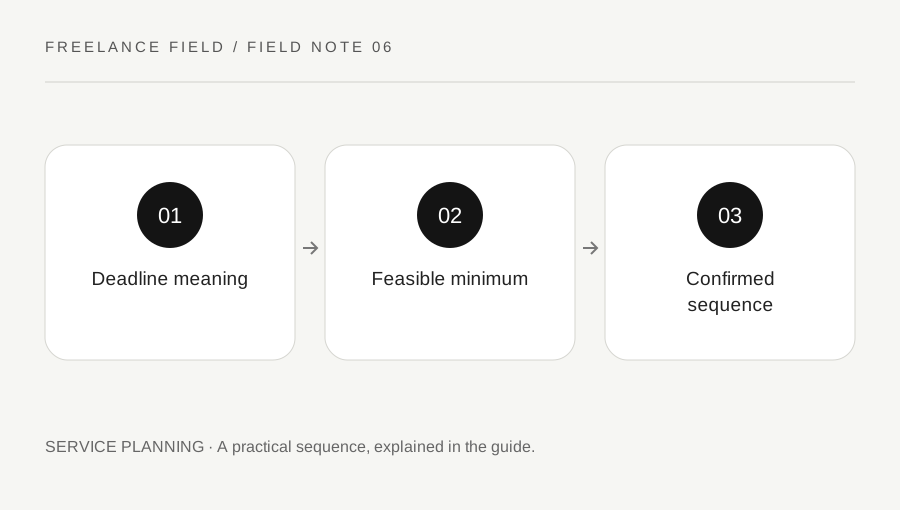
Original explanatory diagram. Examples illustrate a method or decision; they are not claims of personal testing.
Find the actual fixed point
Ask what the requested date means: first draft, final approved file, upload, printer receipt or public launch. These are different milestones. Find the time zone and any external cutoff. A client saying Friday may mean a morning meeting rather than the end of your working day. Record the event that makes the deadline important.
Distinguish a fixed external requirement from a preference. If the file is needed for an event, ask what must be usable at that event. This can reveal a smaller legitimate deliverable without dismissing the client’s urgency. Do not assume that the entire imagined project is essential simply because the final date cannot move.
Check readiness before your own availability
List the inputs needed for production: final copy, approved assets, output specification and a person who can review promptly. Ask which are ready now and inspect them. Being free this afternoon does not help if the only authorised approver is unavailable until next week. A request is not production-ready merely because it has a date.
For an illustrative one-page event handout, a missing venue address and unapproved sponsor logos can be more serious blockers than the layout work. Mark those dependencies and give each an owner. Avoid filling unknown facts with guesses to create a convincing draft. A polished placeholder can be accidentally published when everyone is working quickly.
Define the smallest useful output
Offer a focused deliverable that still serves the goal: one format, supplied copy, an existing approved visual system and one consolidated review. Explain any exclusions, such as alternate language versions or custom illustration. Removing scope should reduce real production steps rather than simply lowering quality checks.
Show the tradeoff clearly. A same-day adaptation of an approved template is different from a new identity direction. If neither route is feasible, say so and identify a realistic later date or another appropriate option. Do not promise an unsafe, misleading or inaccessible output merely to meet the clock. Necessary factual and usability review remains part of the work.
Build the schedule backwards with named checkpoints
Start from the external cutoff and reserve export, delivery and final checking time. Add the client review window and the production period before it. State the input deadline and what happens if it is missed. Avoid presenting a minute-by-minute plan as certainty when dependencies remain unresolved.
An illustrative plan might require final copy before noon, one proof later that day and consolidated corrections the next morning, with a defined delivery afterwards. The actual times depend on the work. Ask the approval owner to confirm availability, and make clear that new scope needs reassessment. Use a written agreement appropriate to the engagement for the commercial commitments.
Protect the final review and record the outcome
Check names, dates, links, dimensions and the chosen output against the current brief before sending it. Use a short task-specific checklist so urgency does not cause random review. Deliver through the agreed channel with the version and intended use stated. Do not send an unlabeled draft where it could be mistaken for the final file.
After the deadline, note which assumption was accurate and which dependency created risk. Discuss whether recurring urgent requests should become a planned service or an earlier intake process. Do not turn one exceptional effort into an unspoken permanent response standard. A useful urgent-work process creates a clear commitment that both sides can actually meet.
A practical checklist
Choices are saved in this browser. Reset them here or clear this site’s browser storage.
Questions that come up
Should I accept if I have a free evening?
Assess the complete sequence, including client input and approval, before deciding. Personal availability is only one dependency.
Can I skip review to save time?
Reduce scope or choose another route rather than silently removing necessary factual and output checks.
Is an urgent request automatically more expensive?
Commercial terms depend on the agreed service. Explain any proposed terms before acceptance and use an appropriate agreement.
References & scope
Background references checked on 18 October 2026. Worked examples and diagrams are original teaching material.